Bringing brands into Web3, no code required
Turning a crypto-native NFT platform into a tool any marketing team can use to create, sell and reward with NFTs, without hiring a single blockchain developer.
A capable NFT engine that only crypto insiders could drive
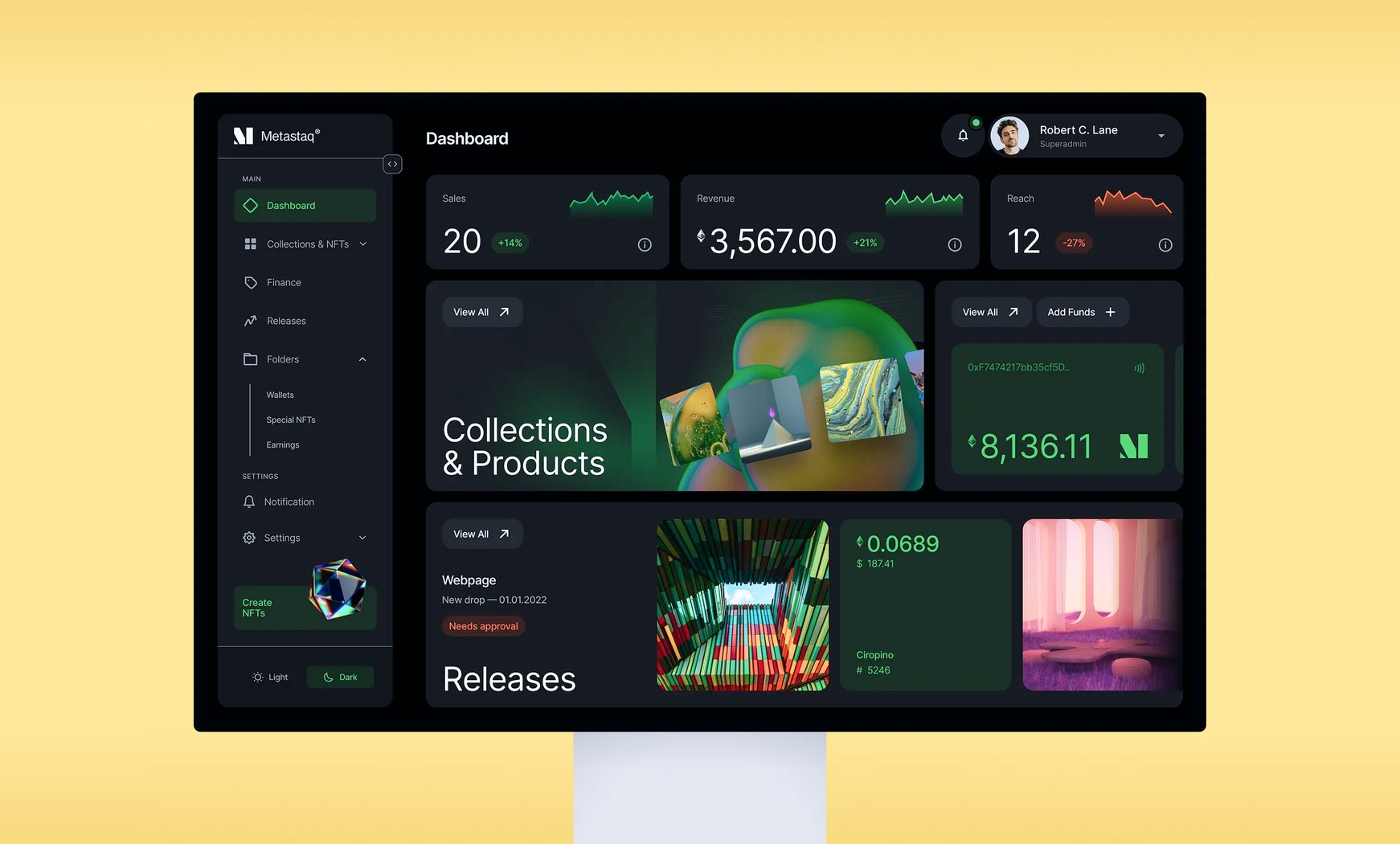
Metastaq lets companies mint, sell and manage NFTs. The technology worked, but the product had grown up around individual crypto creators. Every screen assumed you already understood smart contracts, networks and wallets.
Brands were curious about digital collectibles and loyalty tokens, but their marketing teams kept stalling at sign-up. The redesign had one job: rebuild the platform around how businesses run campaigns, not around how the blockchain works.
sales growth for retail client IUIGA after launching with the platform.
brands signed up once the no-code flows went live.
on OpenSea for the 6isty8ight collection, launched through Metastaq.
Sign-ups stalled at the first technical question
Launching a drop meant picking contracts, networks and wallets before seeing any result. For most brands that meant hiring a developer, and many stopped there.
Built for creators, sold to brands
The interface spoke fluent crypto: jargon on every screen, technical settings up front, and a look that felt closer to a trading terminal than a marketing tool. Mainstream brands read that as risk.
If launching an NFT needs an engineering team, most brands will never get past the idea stage.The core insight behind the redesign
Who we were really designing for
UX research with brand teams and decision-makers showed two very different audiences sharing one product, with very different needs.
- Plan in campaigns and outcomes (a drop, a reward, a launch), not in contracts and tokens.
- Need to create, price and publish without waiting on engineering.
- Want a storefront that looks like their brand, not like a crypto exchange.
- Need a clear view of sales, revenue and reach to justify the investment.
- Look for credibility and trust signals before committing budget.
- Care about ownership, costs and records for finance and compliance.
How a brand launched a drop before the redesign
Steps where non-technical teams got stuck
How might we let a marketing team launch an NFT campaign without writing a line of code, and still trust every step?
Business workflows first, blockchain second
Every flow was rebuilt around a task a marketer already understands, with the technical detail tucked behind it.
Create an NFT like filling in a product listing
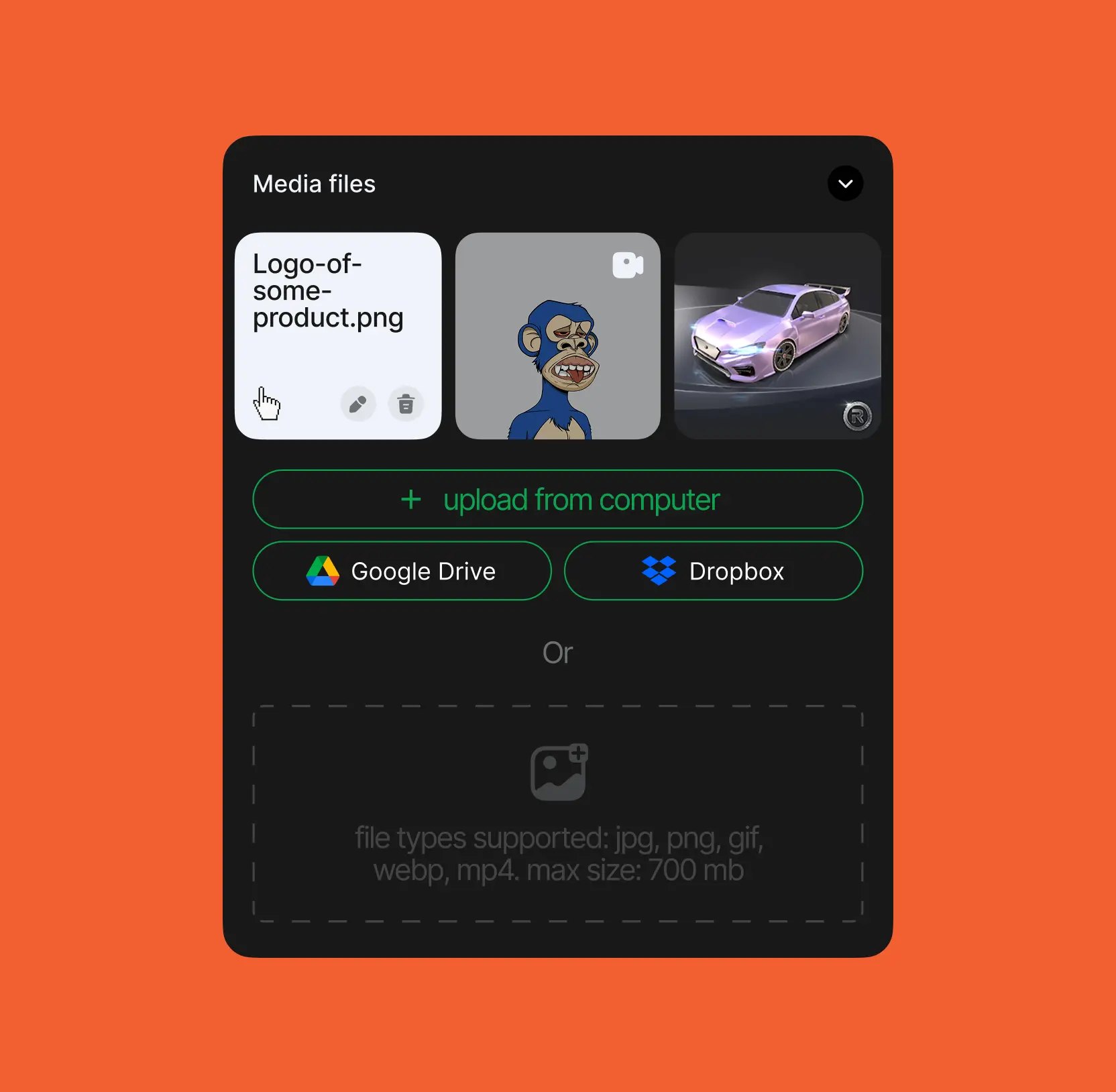
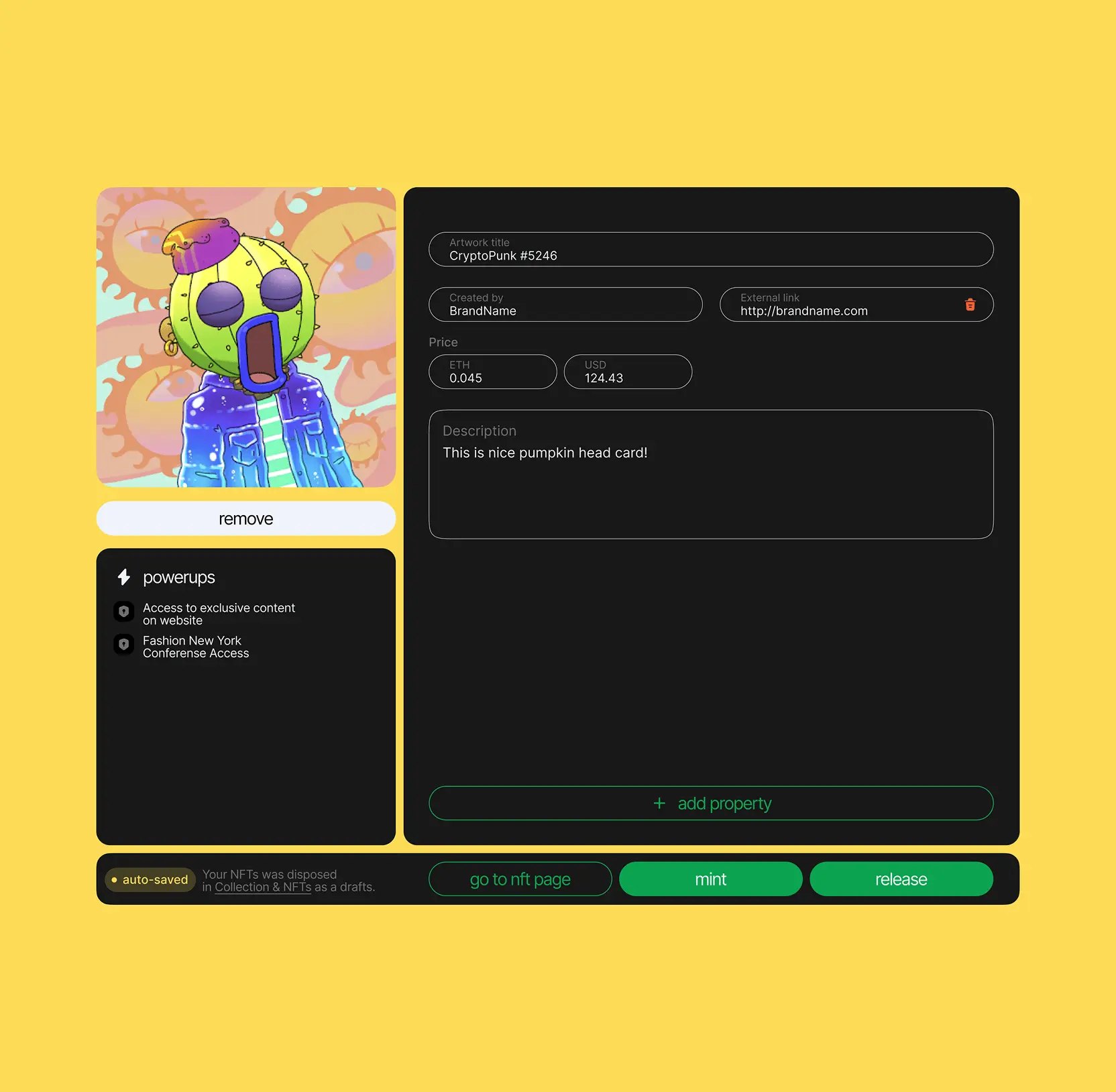
Upload artwork from your computer, Google Drive or Dropbox, then add a title, creator, price in ETH or USD and a description. Powerups attach real perks, like gated content or event access, so an NFT becomes a loyalty reward. Drafts auto-save, and minting or releasing is a single button.
Release in clear, numbered steps
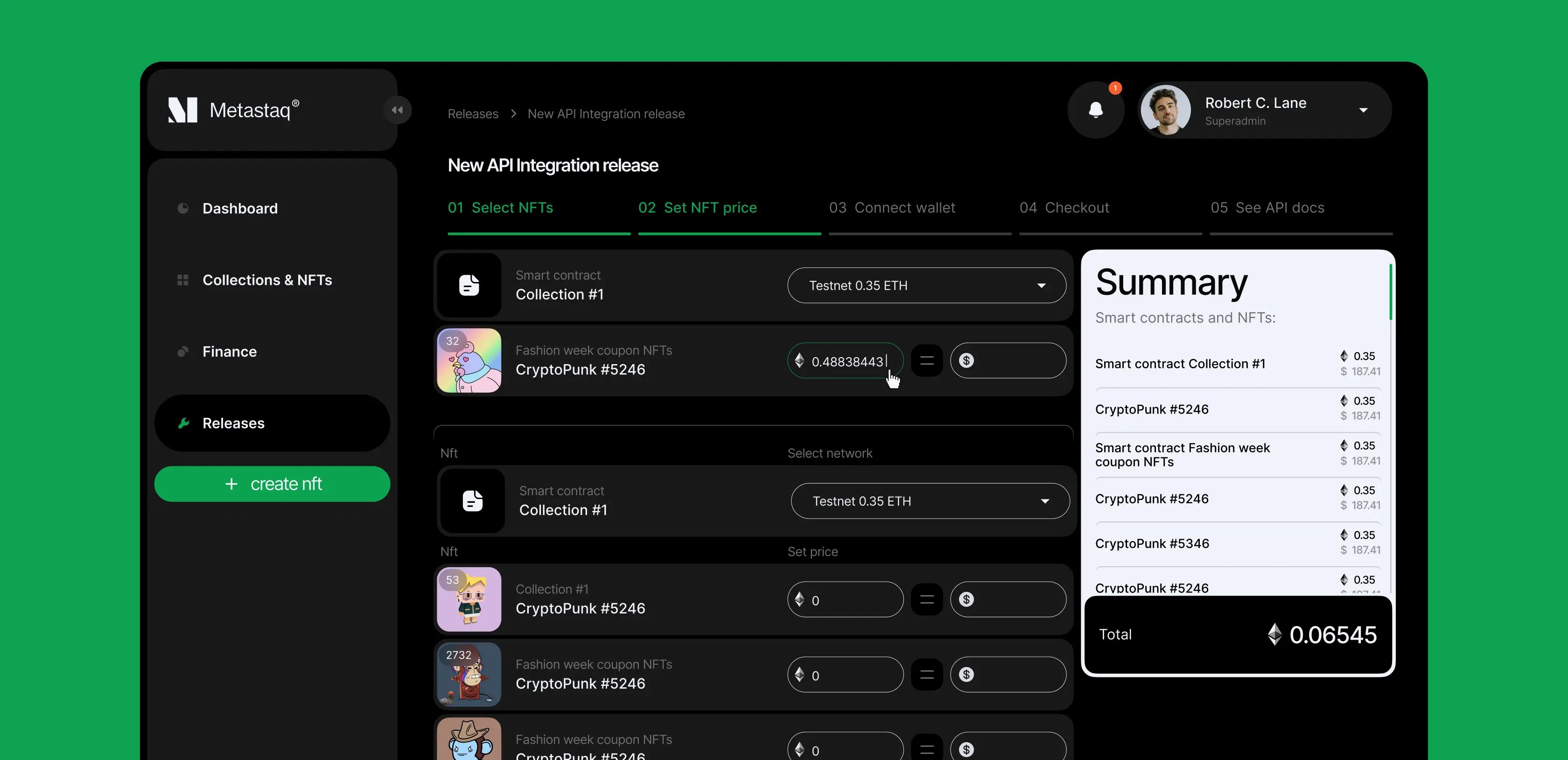
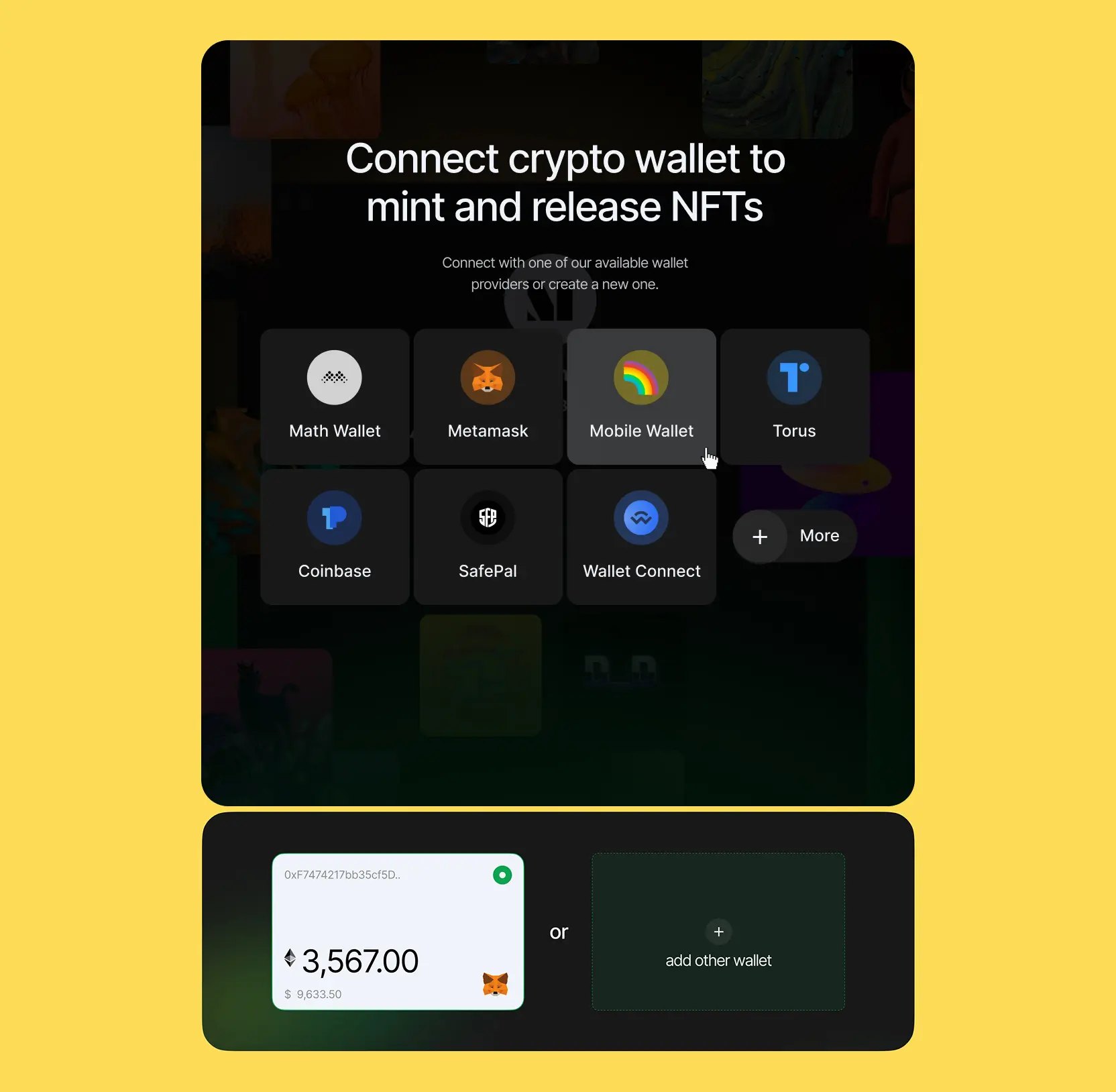
Releasing is now a guided sequence: select NFTs, set prices, connect a wallet, check out, then get the API docs. A live summary keeps the total cost visible the whole way through. Individual and bulk minting share the same flow, so one NFT or a whole collection feels the same.
A storefront builder that looks like the brand
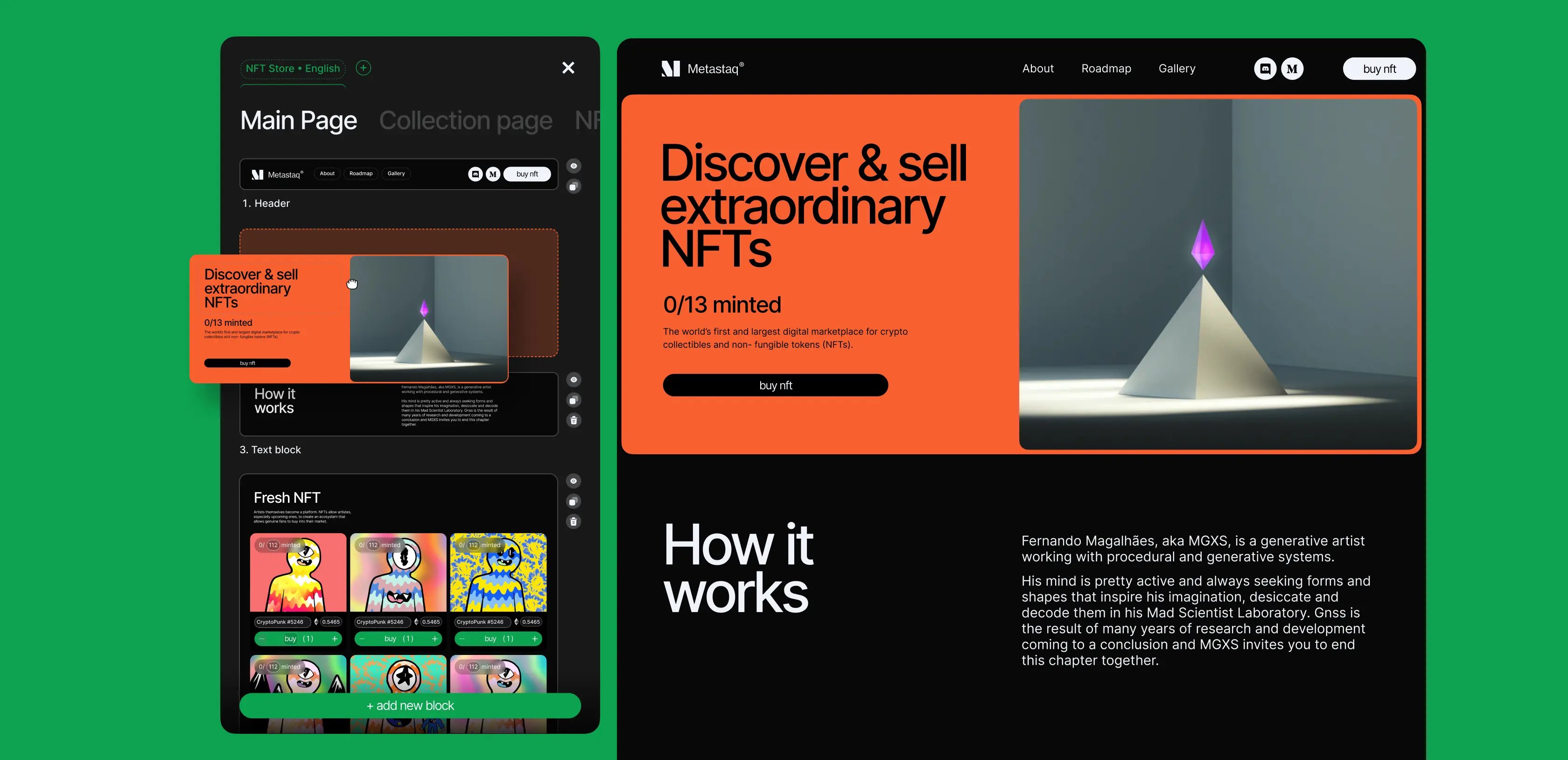
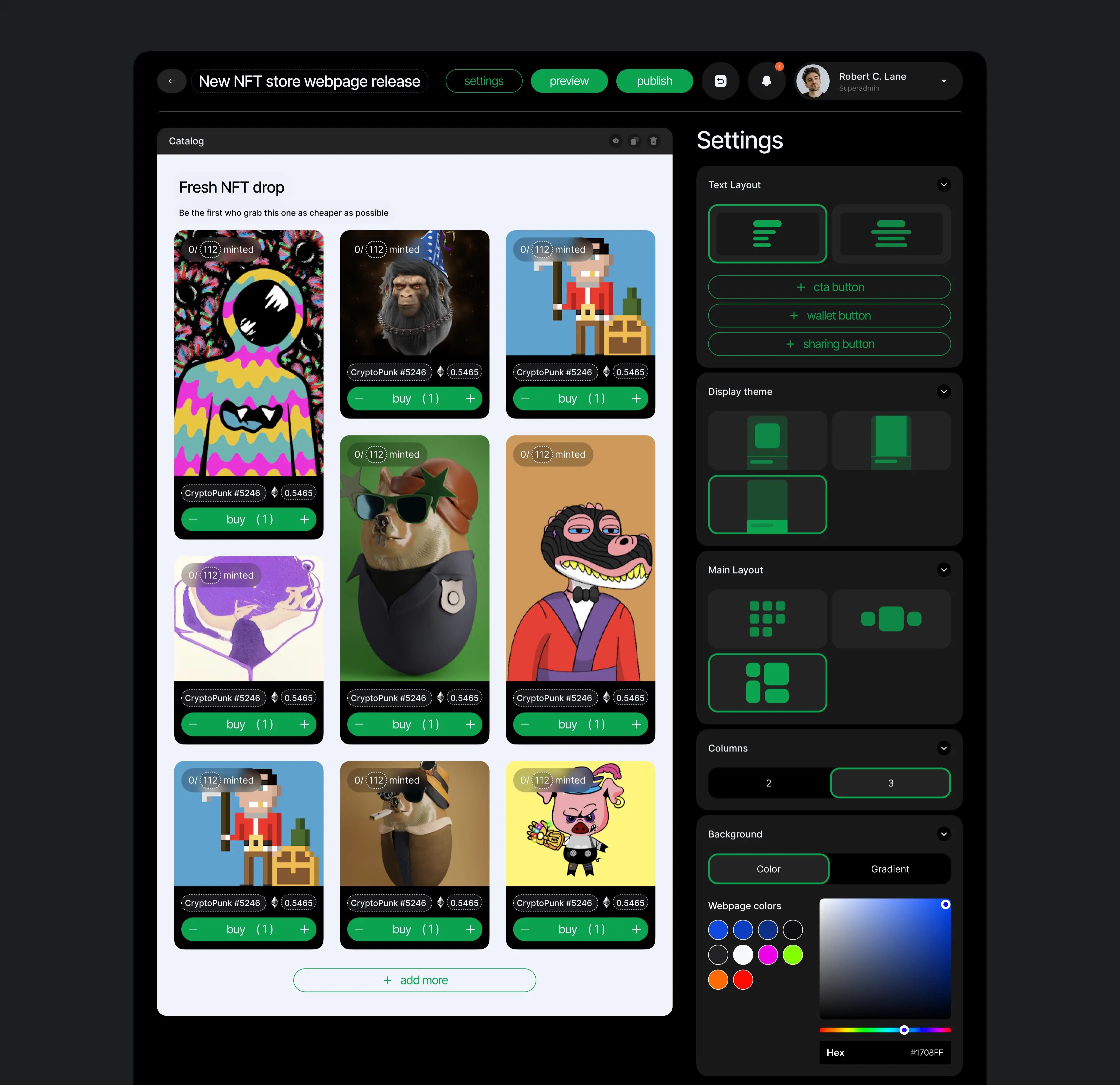
Brands build their NFT store from ready-made blocks (header, hero, text, catalogue) and rearrange them by dragging. Settings for layout, columns, theme and colours let each store match the company’s identity, with preview and publish always in reach.
A Web3 platform brands could run themselves
The redesign replaced crypto jargon with an approachable, credible interface and turned multi-tool work into guided flows inside one product.
No-code NFT creation
Upload, describe, price and add perks, then mint one at a time or in bulk.
Store builder
Template blocks and brand settings for a storefront that feels on-brand.
Holder rewards
Gated content and event access that turn NFTs into loyalty tools.
sales for IUIGA
brand sign-ups
OpenSea ranking for the 6isty8ight collection
What I’d carry forward
Speak the user’s language
Brands didn’t need to learn Web3. The product needed to learn marketing. Reframing every flow as a familiar task did more than any tutorial could.
Trust is a design material
For newcomers to crypto, a calm, credible interface lowered hesitation as much as the simpler flows did. How it looked was part of how it worked.